
The war in Ukraine makes Germany’s extreme dependence on fossil fuels painfully clear on a daily basis. This realization is also likely to radically change private mobility—on a scale that seemed unimaginable just a few weeks ago. Interesting approaches, for example, come from the Wissenschaftszentrum Berlin für Sozialforschung.
Geography class in the 1970s: the teacher shows a grainy film about the west coast of the United States. We see a typical suburban settlement with middle-class single-family homes, large lawns, wide garages, and multiple parking spaces on each property. We are amazed: almost every household has two cars—at least! A woman with an elaborate blow-dry hairstyle gets into her sedan and drives 300 metres to the nearest mailbox. The reaction in the classroom: general indignation among the baby boomers at such excess. And, beneath it all, perhaps a little envy.
Everyone could sit in the front seat
In any case, our generation has learned little from this material, as statistics show. Worldwide, more and more SUVs are on the road. In 2021, new registrations reached a record 35.9 million, corresponding to a market share of 49.5%. In Germany, there are so many cars that all 83 million residents could sit in the front seat. On the way to work, an average of 1.2 people occupy each vehicle. In addition, almost half of all car trips in Germany (43%) cover no more than five kilometres—a distance that could easily be covered by bicycle.
“How irrational all of this is,” Dr. phil. habil. Weert Canzler illustrated using these figures in his keynote speech at the “Day of Sustainable Enterprises 2022” during the Climate Week Bielefeld. Canzler heads the research group “Digital Mobility and Social Differentiation” (DiMo) at the Wissenschaftszentrum Berlin für Sozialforschung.
“Other sectors will not tolerate this in the long run”
One explanation for our behaviour may be that cars have a certain “pull effect”. However, this is no excuse given the challenges posed by climate change. Overall, the transport sector is clearly lagging behind other areas in terms of decarbonisation, such as agriculture and energy. “Other sectors will not tolerate this in the long run,” Canzler said.
Dual solution of powertrain and mobility transition
So what should be done? Constructive proposals were presented by Weert Canzler in his keynote. The title: “Mobility in Transition: Emission-Free and Connected.” For the transport sector, he proposes a “dual solution,” combining a powertrain transition and a mobility transition.
By “powertrain transition”, he refers to the electrification of vehicles based on renewable energy. However, the scientist adds a limitation: “It does not achieve much if we now electrify all 48 million cars in Germany.”
Rather, a genuine “mobility transition” is needed. This means fewer cars, more cycling and walking, a better and more modern public transport system, and less car-centred “forced mobility.” It is also about reducing the need for travel distances that we feel compelled to cover. The mobility transition is long overdue, Canzler argues, “because we have an immense demand for space combined with extreme waste of resources due to the inefficiency of the private car.” One only has to consider the ratio of a two-ton SUV to just 85 kilograms of human weight inside it.
An alternative: a shared vehicle with bidirectional charging
For the mobility researcher, one thing is clear: “The opportunities lie beyond the private car.” Smarter usage can only be achieved through shared mobility, for example with new types of vehicles that use solar panels and offer bidirectional charging.
Still a taboo topic
At present, the situation looks like this: every year, another 250,000 to 300,000 vehicles are added to the millions already on German roads. Weert Canzler: “If you really want a transport transition, that means, for example: in the short term, removing subsidies and introducing speed limits; in the medium term, internalising the external costs of motorised transport and redirecting investment; and thirdly, building consensus that we want fewer cars and more connected mobility.”
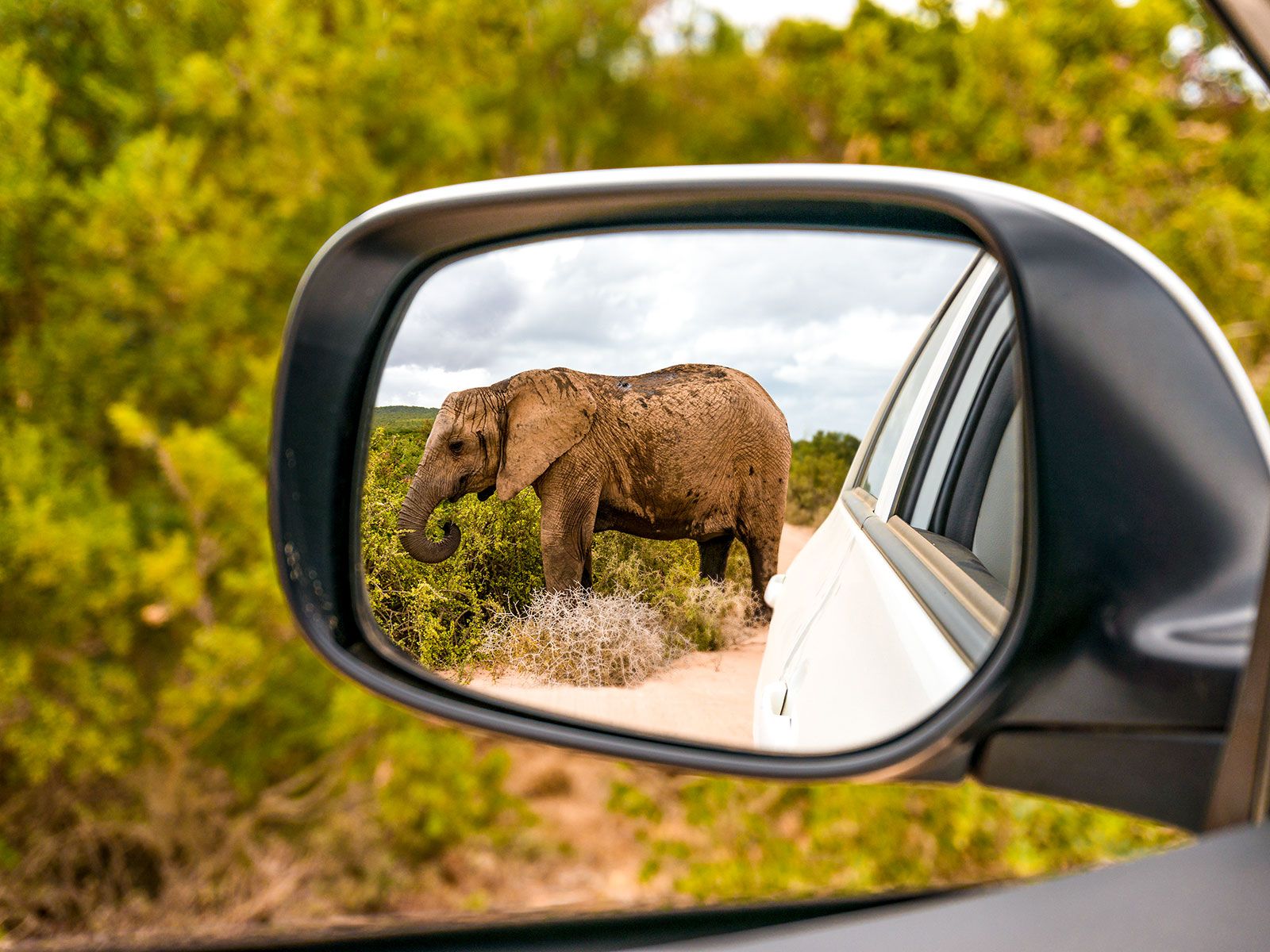
For many, however, reducing motorised individual transport (MIT) remains a taboo topic—so-called the “elephant in the room,” as Weert Canzler puts it. His conclusion: “As long as we do not reach a consensus that fewer cars mean more mobility, we will continue to talk past the real issue.”
The mobility researcher gave his talk at the beginning of the war in Ukraine. Perhaps the disruption caused by the conflict will still push us to finally move the elephant out of the room.
