
Does the fuel discount actually reach ordinary people, tradespeople, and logistics companies? Or are oil companies simply pocketing the three billion euros in tax money? Who benefits from the €9 ticket? And above all: what happens after the three summer months, when the energy relief package abruptly ends on 1 September 2022?
Heated debates about “price gouging” at the fuel pump have dominated the news, talk shows, and social media channels for about two weeks. Critics of Finance Minister Christian Lindner’s proposal largely agree: the compromise reached in an overnight meeting—reducing fuel tax on petrol by 35.2 cents and on diesel by 16.7 cents—does not fully reach consumers. Fuel station prices initially rose shortly before the tax cut. After a brief drop on 1 June 2022 (27 cents for petrol and 12 cents for diesel), prices have since been rising again, returning to mid-May 2022 levels.
Although the ifo Institute has stated that the discount was largely passed on, public frustration remains high when prices exceed the psychological €2-per-litre mark. According to a study by navigation device manufacturer TomTom, this has not led drivers to reduce speed in order to save fuel. The ADAC estimates that up to 20 percent fuel savings would be possible through more efficient driving, though it is not typically seen as an organisation that discourages driving. Yet motorists continue to drive as before. Whether that will remain the case when prices reach €2.50 on the signs remains to be seen.
One thing is certain: the next public outcry is only a matter of time. Still, too few people are changing their habits. As an alternative, there is the electric car: “too little range, far too expensive, not enough charging stations”—that is the reflexive response. Yet very few people look at the actual data. At AD HOC, we have been gathering extensive hands-on experience with electric vehicles since 2017. Our clear conclusion: it is cost-effective.
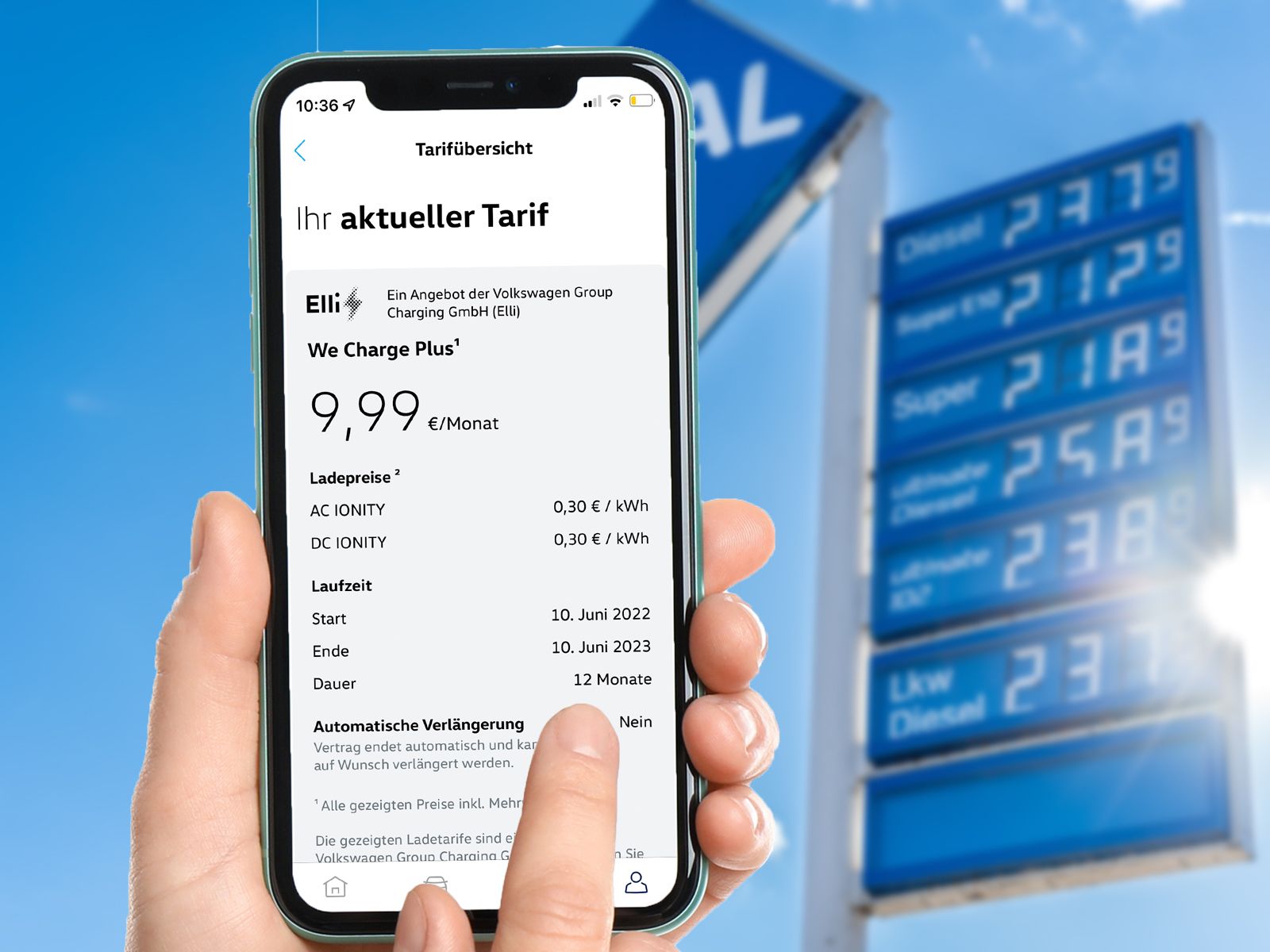
At the beginning of June, we retired the last diesel company car from our fleet. Its successor is an e-Corsa. Three additional fully electric vehicles are already part of the fleet. Thanks to our Elli contract, we pay just 30 cents per kilowatt-hour even at Ionity fast chargers—without any fuel subsidy. And our energy relief package extends well beyond the summer.
