
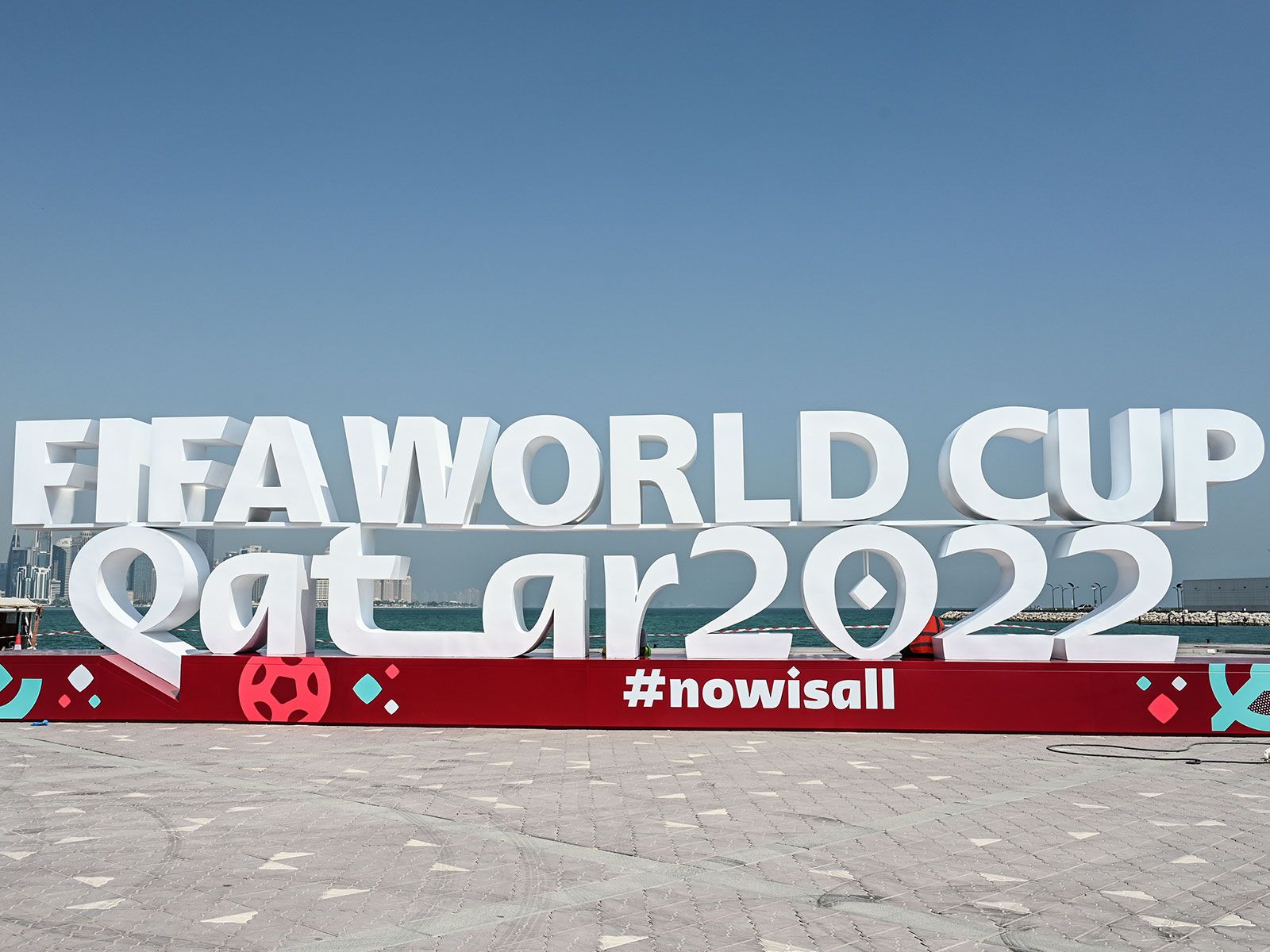
In just a few days, the highly controversial FIFA World Cup will begin in the desert state of Qatar. Unusually for one of the world’s biggest global sporting events, sponsors are only promoting the tournament very cautiously. Even in football-crazy Germany, anticipation remains limited. This is partly because public viewing does not fit well into the pre-Christmas period. Above all, the situation in the host country is acting as a major dampener on fans’ enthusiasm.
Reports about thousands of migrant workers who died on World Cup construction sites, about unacceptable conditions in their accommodation, and about poor pay have rightly caused outrage. Controversial statements by World Cup ambassadors regarding same-sex relationships, as well as widespread discrimination against women, have made the tournament in Qatar a clear no-go for many.
Irreconcilable positions
More and more pub owners are announcing that they will not show World Cup matches on their screens or video walls. In Bundesliga stadiums, fan clubs are calling for a boycott. National team players are also being pressured by the media to clearly position themselves against the emirate and its rulers—or to withdraw from the tournament altogether.
On the other side, FIFA—led by its president Gianni Infantino—has largely allowed itself to be used by the tournament organisers for their image campaign. In Germany, Uli Hoeneß and FC Bayern Munich take a more defensive stance, arguing with the motto: “Attack is the best form of defence.” However, the club’s sponsorship deal with Qatar Airways has long caused heavy protests even among its usually loyal fan base.
According to media reports, two irreconcilable camps face each other: on one side, football fans who want to clearly separate sport and politics and celebrate the World Cup as a football festival. On the other, critics who see only complete rejection of the winter World Cup and the authoritarian desert emirate as the solution.
Is black-and-white thinking helpful?
But is this kind of black-and-white thinking really useful? The German Football Culture Academy recently addressed this question in a panel discussion titled: “How should one report on a controversial sporting event?” According to reports in Kicker, the participating journalists agreed that one must look closely and that a “total refusal to engage” cannot be considered journalism. Ellen Wesemüller from Amnesty International demands from journalists “nothing more than that they do their job properly.” Her demands regarding the protection of human rights are directed at FIFA and Qatar. At the same time, the media should work carefully to avoid feeding false data into the narrative of the organisers, who in turn suspect a campaign against the country. For example, the figure of 15,000 deceased migrant workers is repeatedly circulated. While this number originates from Qatari authorities, it refers to all deaths of non-Qatari nationals between 2010 and 2019 and does not specify causes of death.
Journalistic standards
This figure is often used by public broadcasters, even though it does not indicate how many migrants actually died due to poor working conditions. This example shows that reporting on this World Cup, as well as on the host country and its culture, remains a major challenge.
As a journalistic agency, we will not shy away from this responsibility, but instead aim to create greater transparency through data and facts about Qatar, its infrastructure, and its growing importance as a logistical hub for air and sea freight, energy, and trade. Of course, this will always be done with the necessary distance and a critical perspective.
The tournament kicks off on Sunday. And perhaps both new insights and the sporting event itself will still generate enthusiasm for the players’ performances on the pitch.
