
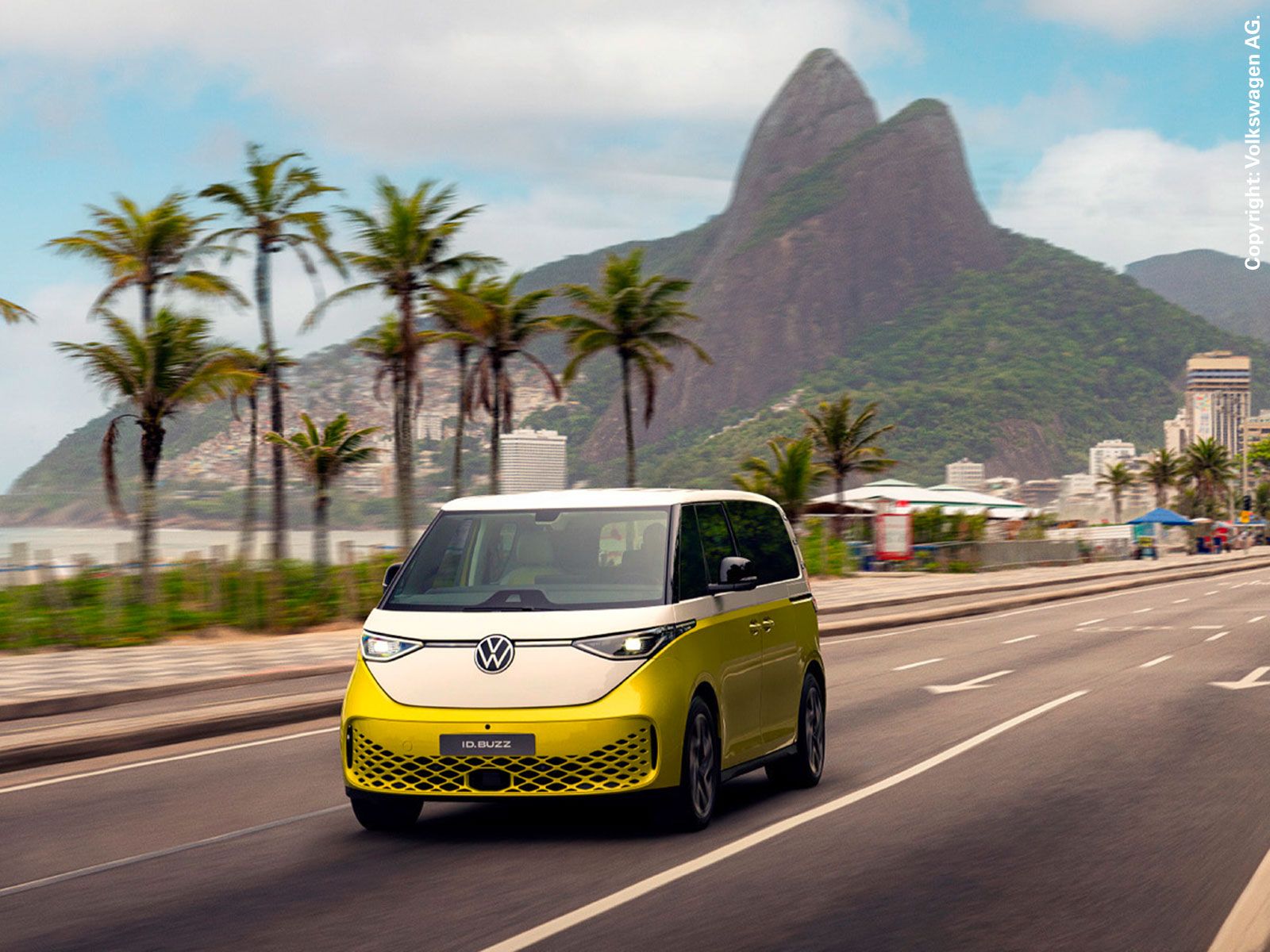
Automotive industry sees strong growth potential for electric vehicles in Brazil
Over the past three years, the number of electric vehicles sold has been steadily increasing. Manufacturers are particularly planning investments in new hybrid models.
On the streets of most cities in Brazil, electric cars are still a rare sight. I noticed this myself during a recent visit to the country. However, my personal impression contrasts with the official figures. According to the Brazilian Electric Vehicle Association (ABVE), electric vehicles account for around 3.6% of current passenger car sales. In the first eight months of this year, 49,000 out of just over one million newly registered passenger cars were electric vehicles. That represents an increase of almost 60% compared to the same period last year. This growth is driving the industry to expand the local electric vehicle market. According to the association, the number of “pure” electric and hybrid models sold has even tripled over the past three years.
In major cities, these models are therefore becoming increasingly visible, even though the figures still appear far from those in European countries. For example, in Europe, almost 14% of all registered passenger cars were electric as early as September 2023, according to ADAC. However, the market in Brazil is developing differently from Europe: in the South American country, hybrid models in particular dominate production and demand.
- The majority of electric vehicles sold in Brazil are hybrid electric vehicles (HEVs). These combine a combustion engine with a battery that can be partially recharged while driving. The engine runs on either bioethanol from sugarcane (so-called flex-fuel HEVs, which account for a 35.6% market share of electric vehicles) or gasoline (with a 17.1% share). Toyota is the market leader in this segment. It is worth noting that Brazil is the world’s largest producer of sugarcane. Along highways in the interior of São Paulo state, sugarcane plantations are a common sight, positioning the country strongly in the renewable energy market.
- Closely behind are plug-in hybrid electric vehicles (PHEVs), with a market share of 35.3%. These vehicles can be charged both via the combustion engine and through the power grid. In Brazil, models from Chinese manufacturers BYD and GWM are particularly popular.
- Battery electric vehicles (BEVs), also known as fully electric cars, still account for a relatively small share of the market at just 12%. Here too, Chinese models are especially popular.
Because hybrid models combined with bioethanol from sugarcane are particularly preferred in Brazil, and this industry plays a major role in the country, Germany Trade & Invest predicts that the sugar-ethanol industry will dominate Brazil’s market during the transition in mobility systems, potentially slowing the penetration of fully electric vehicles in the future. In addition, there is another key factor: fully electric cars are significantly more expensive for the majority of the population than conventional models. There is also still a lack of an extensive charging infrastructure. As a result, many potential customers fear not being able to reach their destination.
In response, manufacturers such as Audi, BMW, Volvo, Volkswagen, Porsche, and GWM are working to expand infrastructure. The Brazilian government introduced the so-called “Programa Rota 2030” plan in 2018 to promote the production of low-CO₂-emission vehicles through tax incentives. These include hybrid and fully electric vehicles as well as bioethanol-powered vehicles. The goal is also to make these models more affordable.
The automotive industry in Brazil continues to feel the effects of the COVID-19 pandemic on the economy. Some manufacturers have temporarily suspended production or left the Brazilian market due to stagnation in the automotive sector this year. Ford (January 2021) and Mercedes-Benz (December 2020) closed their manufacturing plants in the country. Audi also announced the closure in February 2021 but resumed production in 2022. At the same time, some automakers are planning further investments in Brazil, including in electric mobility. For example, BYD has taken over a former Ford industrial site in Bahia in northeastern Brazil to produce electric and hybrid vehicles. In total, around €570 million is expected to be invested.
Volkswagen plans to invest one billion euros in Brazil to launch 15 new hybrid and fully electric vehicles in the market over the next two years. The German manufacturer aims to achieve 40% growth with this strategy. According to a study by McKinsey & Company, around 55% of passenger cars sold in Brazil could be electric by 2040. This creates a strong opportunity for Brazil to become a leader in electromobility in South America.
Photo: Volkswagen ID. Buzz is one of the electric vehicles planned for launch in the Brazilian market. Copyright: Volkswagen
