#ADHOCoutdoors | Once upon a time there was a king who took great pleasure in having railway tracks running through his palace gardens, steam locomotives passing by, and a new railway station located just 300 meters from his window. This happened about 180 years ago in Brühl near Cologne.
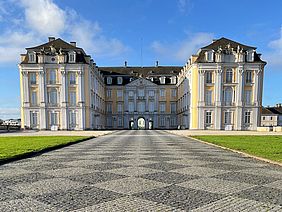
We could hardly believe it. That is why we made a short stop from the new All-Service-One location of our client Wrightbus in Brühl to visit the UNESCO World Heritage Site “Palaces of Brühl and Gardens”.
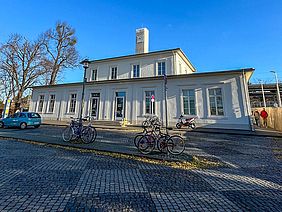
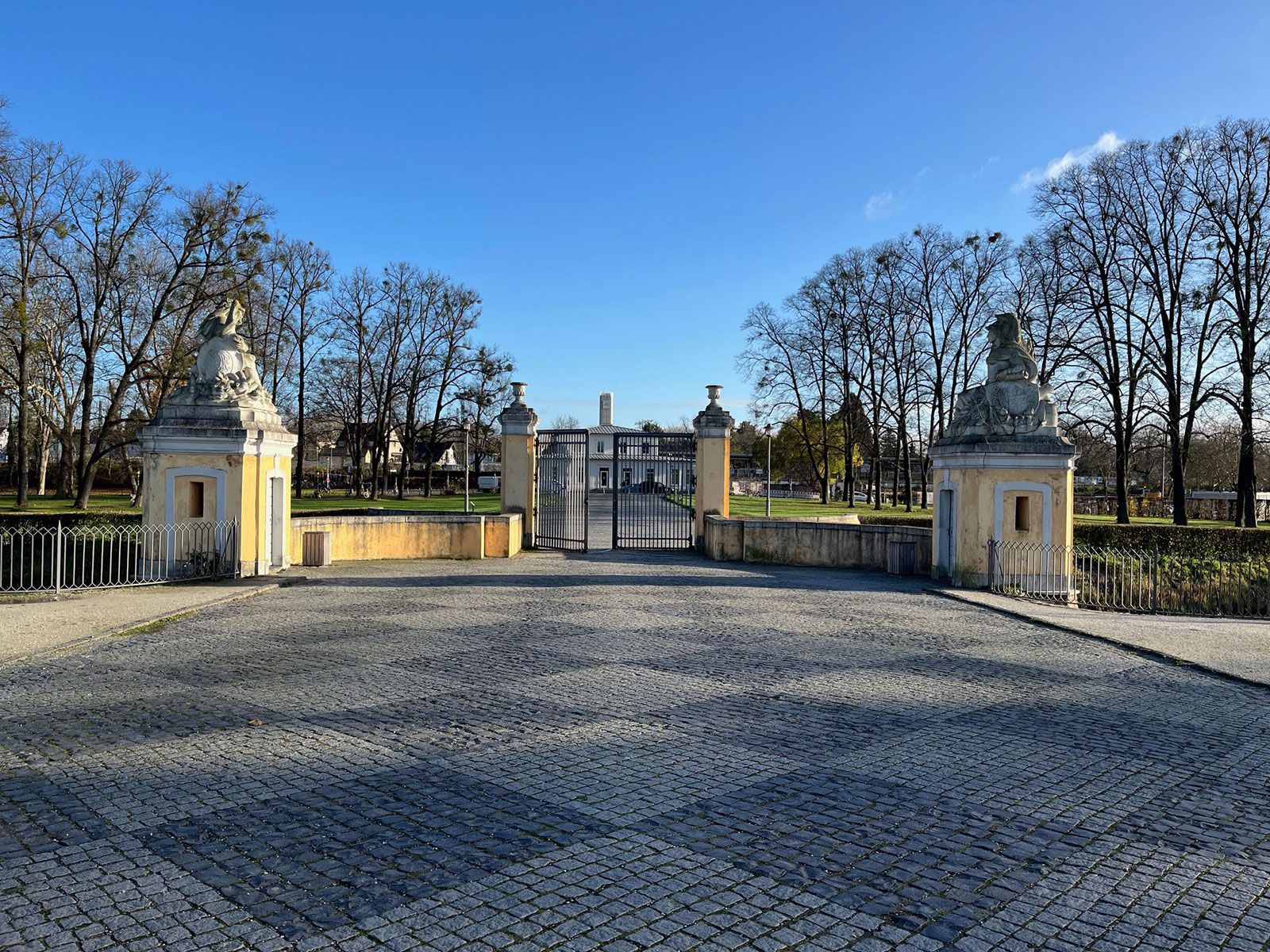
From the cour d’honneur of the Rococo Augustusburg Palace, the path leads directly to the station building with its striking clock tower. And what can we say: the combination of nature, historic and modern architecture, and railway technology has a very special charm!
From today’s perspective, it may sound like sacrilege — a railway station in a park. At the time, however, there was even a “green” rationale behind it: King Frederick William IV did not live permanently in his residence palace. He wanted people from crowded Cologne, about 13 kilometers away, to be able to stroll and relax in the greenery.
So the former “Bonn-Cologne Railway Company” ensured a railway connection as close as possible to the palace. The railway routing and redesign of the palace gardens were essentially planned together under the direction of the famous landscape architect Peter Joseph Lenné. The station building itself was designed by city architect Johann-Peter Weyer.
On 15 February 1844, the small but elegant palace station was inaugurated. Even Queen Victoria travelled from England for the occasion. The stop became the most important station on the new Cologne–Bonn railway line.
Today, the city of Brühl is redesigning the station surroundings, for example with a larger and newly designed bike station. The historic station building has already been renovated. And don’t worry: the visual axis between Augustusburg Palace and the station building is explicitly preserved.
Whether by train, bus, or bicycle: Brühl and its transport operators, such as Regionalverkehr Köln GmbH (RVK) with its emission-free hydrogen bus fleet, continue to stay “at the pulse of time”.
Sources: City of Brühl, schlossbruehl.de, ZDF, baukunst-nrw.de, Wikipedia, et al.