
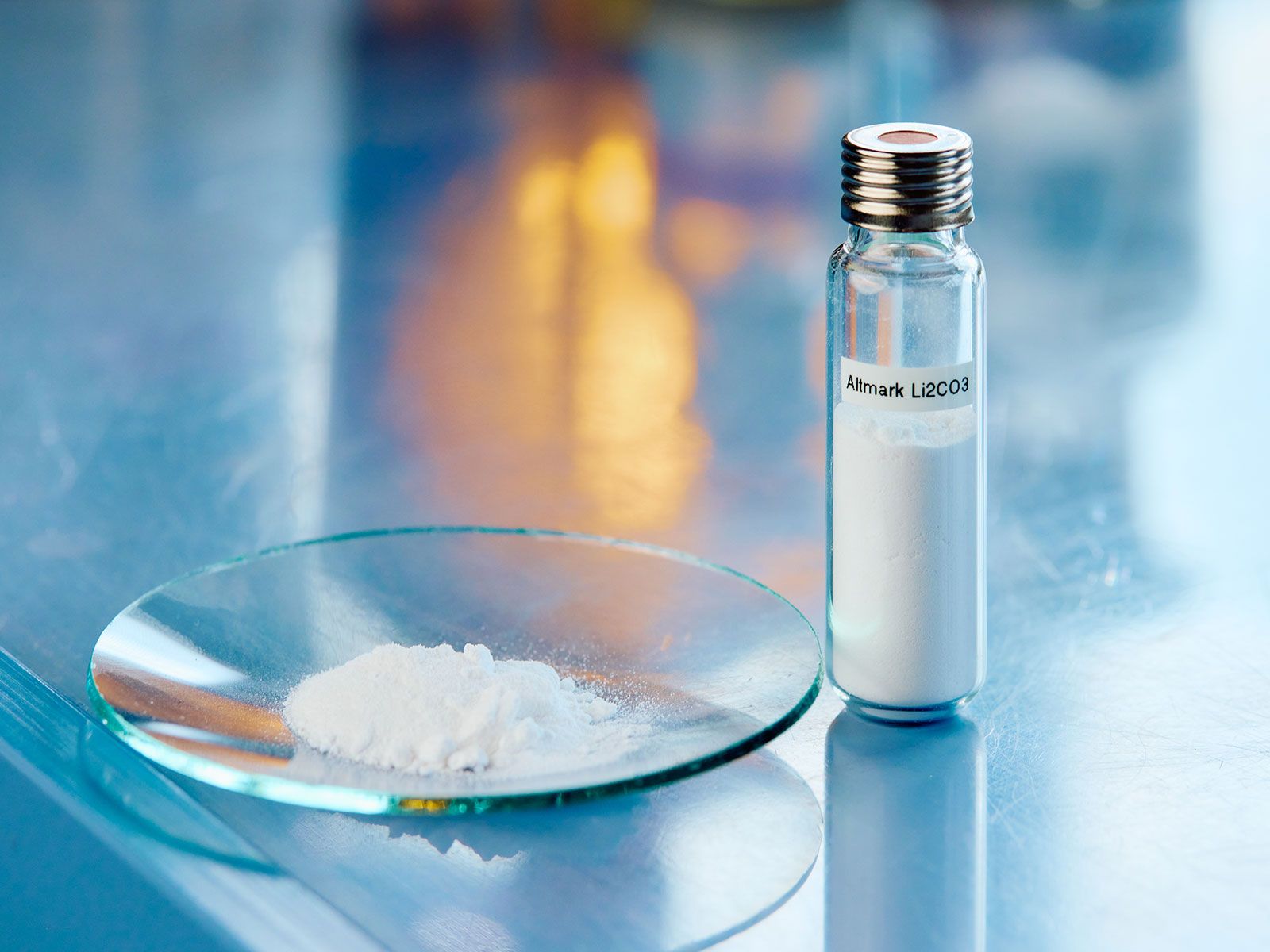
In the north of Saxony-Anhalt, more precisely in the Altmark region, one of the world’s largest “project-related” lithium deposits is believed to lie dormant. This refers to proven resources amounting to 43 million tons of lithium carbonate equivalent (LCE). These figures come from a study commissioned by Neptune Energy. Annual production of up to 25,000 tons of lithium carbonate is considered feasible. This could be enough for the batteries of 500,000 electric vehicles per year.
Lithium is considered essential for the energy transition away from fossil fuels. The raw material is not only used in lithium-ion batteries installed in electric vehicles, but also in products such as smartphones and tablets.
The problem: although lithium is NOT classified as a rare earth element, Germany currently still depends almost entirely on imports. Domestic production could significantly reduce existing raw material dependencies.
According to its own statements, Neptune Energy Germany has received mining regulatory approval for extraction in the Altmark region. In a pilot phase, various technologies are now being tested to extract lithium from thermal water. In professional circles, this is considered comparatively environmentally friendly.
From an economic and strategic perspective, another advantage for the Altmark region is that natural gas has been extracted there since 1969, and lithium was already detected in the 1970s during gas production. For this purpose, more than 600 deep wells were drilled to explore the geological layers. By sustainably repurposing the existing natural gas infrastructure, Neptune Energy states that environmental impacts can be reduced to a minimum. The company promises: “We completely avoid open-pit mining and large evaporation ponds – as known from Australia, Chile, or China.”
There are also lithium extraction projects in other parts of Germany, including Brandenburg and Lower Saxony, the Ore Mountains in Saxony, and the Upper Rhine Graben in southwestern Germany.
Sources: Neptune Energy, mdr, tagesschau.de
Photo: Neptune Energy Germany GmbH
